Wednesday, 8 February 2012

Risk Assessment


RISK ASSESSMENT FORM
Assessment by:
Haydn Corr
Assessment for:
Filming external to college
Date:
 08/02/12


Activity
Hazard
Risk
Persons in Danger
Existing Control Measures in Place
S
L
R
Control Measures Required
C

Filming kidnap scene in the carpark

Traffic


Being knock down


Crew


Safety talk
Experience of Highway code
Supervision.
Talk covers using the crossing during trip.

3

1

3


A


Uneven Paths

Slip/Trip/Fall


Crew

Safety talk
Experience of Public areas
Supervision

2

1

2


A


Other Pedestrians

Bumping into others
Falls

Crew

Safety talk
Experience of Public areas
Supervision

1


2

2

A
Misbehaviour
Injury
Slip/Trip/Fall

Crew
AUP for all equipment gone through. Technician to report to lecturer any signs of equipment mis-use.
1
1
1

A
Walking to and from filming location


Illness / Injury

Slip/Trip/Fall, General Illness, Faintness

Crew

Safety talk
Experience of Public areas
Supervision. Make sure students with Mobiles have family and emergency contact numbers.
1
2
2


A

Walking to and from filming location


Getting Lost

Not being able to get back to college

Learners

Map given to students of area. Pairing students together where those who do know where they are with those who are unfamiliar with area


A
Carry filming equipment

7KG maximum weight
Strain

Slips, trips and falls

Injury

Slips, trips and falls

Learners
Students to be given manual handling information before going to film. RA to signed by tutor which explains how equipment will be transported and whether this is within a safe distance to carry equipment or if transport has been arranged what type, who and the safety of this. E.g. parent/student’s own vehicle. Equipment is counter signed by both tutor and technician to avoid students borrowing equipment without tutor’s prior knowledge.


2

1

2
Continued reinforcement of proper forms prior to filming.

A
Theft
Assault
Injury
Learners
Learners must film in agreed production groups. Booking form has space for mobile(s) to be written down. Safety talk given by tutor prior to filming. RA by students to be signed by tutor who will look at where the student proposes to film and the safety of this.

2

1

2
Continual awareness
Continued reinforcement of proper forms prior to filming.

A
Filming
Environmental factors.
Slips, trips and falls
Uneven paths

Injury.
All staff
Recce  (Location Survey)to be completed by student and seen by lecturer. Students informed to make sure area is clear and kept clear of camera bags etc. All equipment to be properly installed in accordance with Acceptable Usage Policy of the college.


2

1

2
Continual awareness
Continued reinforcement of proper forms prior to filming.

A


Key:
S =
Severity I (low) to 3 (high)
C = Conclusion

[insert ‘A’ for adequately controlled]
[insert ‘N’ for not adequately controlled]

WHERE ‘N’ IS THE CONCLUSION, AN ACTION PLAN IS REQUIRED

L =
Likelihood 1 (low) to 3 (high)

R =
Rate = S x L

Friday, 3 February 2012

Lighting Homework

Lighting


Key and Fill Lighting

Key and fill lighting illuminate the whole face, rarely do you see obvious shadows. Even though the photo I got doesn't show it, the lighting can portray happiness. This type of lighting is also the most commonly used. We could use this in our thriller opening during the questioning of the bank manager. As well as being a happy sort of light set up, it can be used for interrogation in which the light can blind and confuse the subject.


Back Lighting

Back lighting is not a very commonly used set up. However, when it's used it makes the character/person have a silhouette, only lighting their outline. This is a dark type of shot and can be used when creating mystery for a character, be it a robber for example. Back lighting could be a very useful shot in our thriller as at first we want to add suspense by not showing the faces of the people kidnapping the bank manager. 


Side Lighting


Side lighting, along with back lighting is not a very common lighting technique to use, even though we can see part of the characters face, the other half is shadowed, which makes the audience curious to what is on the other side of his face, for example in The Dark Knight where Harvey Dent reveals himself after being burnt. I don't think that side lighting would be good to use in our trailer opening, because, as much as it's nice, I think that for what we want to do, it shows a little too much.


Bottom Lighting


Bottom lighting I have found to be used a lot in hand held camera horror films, as the camera pointing towards the characters with the flash on would be shining from underneath their faces. Again I don't think we'd be using this lighting angle in our thriller opening as it's a bit too 'unprofessional' (for lack of a better word).


Top Lighting


Top lighting I imagine as being used in a street location, for example a character standing under a street light. Depending on how strong the light is, can show us how much of the face is being illuminated, i.e. this photo the beam is subtle. If we were to use this in our thriller opening, I think that the light would have to be a little stronger, just to show a few more features. Especially in the car park scene.


Synopsis of "What Goes Around..."

The story is of a bank robbery in which 3 people take part. One of the characters is an employee within the bank and helps the other 2 in stealing the money. But not all goes to plan as the employee betrays the other 2 and gets away with the money. Now the 2 have escaped from prison and are seeking revenge and their money. They kidnap the bank employee in order to find their money and to piece together what happened on the day. The 2 make a startling discovery that it wasn't just the employee that betrayed them but one of their own, but which one ?

Thursday, 2 February 2012

Roles

Script - Haydn
Props - Emma
Story Board - Harry
Location - Group
Health & Safety - Group
Lighting - Group
Actors - Group
Camera - Group

Deadline 2

Deadline Two – Pre-Production Planning

A completed storyboard for the entire opening (preferably having used ‘post it’s), including initial ideas about title placing. 
This needs to be made into an animatic of approximately the same length as the final film will be (shots to be timed carefully) with a voice-over explanation and embedded onto the blog.

Also: 
- a synopsis for the whole film narrative from which this will be the opening (about 100 words),
- the script for any dialogue,
- list of roles (see pre-production planning advice)
- images of locations and decisions about locations,
- prop research and justification in terms of character and story
- health and safety, including risk assessments for filming and use of equipment.
- lighting decisions. 

Blog Heading “Pre-Production Planning”(clearly label which group member has taken responsibility for each of the various posts). 

Again, consider blog format – images, text, screen grabs, embedded video, hyperlinks, etc

If you want to film over half term, this needs to be handed in earlier in order that we can check it through and grant permission.

Deadline - Friday 10th February

Textual Analysis (Haydn)


Shutter Island:


Sound:

·        The first thing you hear in the opening is a minimalistic non-diegetic soundtrack that plays over the opening titles and gives it an eerie feel.

·        The diegetic sounds of the ocean and the wind are then heard and as the mist clears a boat is seen and a sombre chord is repeatedly played every 8 seconds or so, this could be to show building tension or that the people on board are in danger/are heading towards danger.

·        Diegetic sounds of rattling chains and Leonardo DiCaprio vomiting are then heard, the rattling chains add an unnerving tone to the scene as the chains are then seen to be connected to handcuffs and handcuff hooks, showing the boat is a prison boat.


Editing:


·        The opening titles can give an inclination to the genre and combined with the sound track can set the mood of the whole film. The text used for the titles is quite serious and it’s darker at the top of the letters.


·        The words “Boston Harbour Islands 1954” then appear on screen. This is used to contribute to setting the story as it sets the time period and also the location giving an insight to the audience.


·        The initial shot has quite a slow pace but then it changes quickly to fast cuts to coincide with the panicky character DiCaprio is playing on screen.


Camera work:

·        The opening shot is an ELS of a boat with a solitary figure standing at the head of the boat. This shot doesn’t contribute to setting the story but helps set the scene as the boat is seen surrounded by miles of ocean.


·        The next shot is a MLS of a figure hunched over a toilet; the shot doesn’t allow you to see the characters face just the body which builds suspense leading up to the introduction of the character.


·        This over the shoulder medium Close up shot shows the worry on the face of DiCaprio, combined with the view of the ocean through the window lets the audience see the characters emotion and give an insight to the setting.


Mise en Scene


·        The ocean setting is used to show that the characters on board are heading towards something, the opening shot shows the boat heading towards the camera rather than away. This makes the audience anticipate what the destination the characters on board are heading too.


·        The costume of DiCaprio helps the audience understand he is part of some kind of law enforcement agency. This is determined by his suit and also by the badge on his belt and the holstered gun on his hip. This makes the audience want to find out more about the character.


Suspect Zero


Sound


·        The first sound is a non-diegetic track of the wind, which is then accompanied by an erratically played violin as the film title appears on screen. This gives the audience a sense of suspense and also gives direct attention to the title suspect zero who is an important character in the film.


·        There is a non-diegetic track of distorted wailing which is the soundtrack for the film, it is important as it is played over a scene which is very relevant to the film. This allows the audience to understand its relevance and due to its repeat throughout the film it enables the audience to link together relevant parts of the film when the track is heard.


Editing


·        The opening titles effectively let the audience know the tone of the film and in suspect zero the titles eerily flash and pulsate giving a serious note to the film, this is then reinforced by the text used for the film title. The title looks like it has been scratched into something and pulsates like the previous title


·        The first take is very long and this is to make the audience focus on what is happening as it is relevant to the main plot of the story. Having a long take makes the audience focus at what is happening on screen and showing the relevance of what is taking place.


Camerawork


·        The first shot is a close up of a drainage ditch, the camera then begins to slowly track upwards with various objects coming in to view such as a baseball and a toy doll. This is then relevant to the milk carton which then comes into shot with the words “missing person” and a picture of a young girl. This immediately makes the audience begin to ask questions and want to know more.


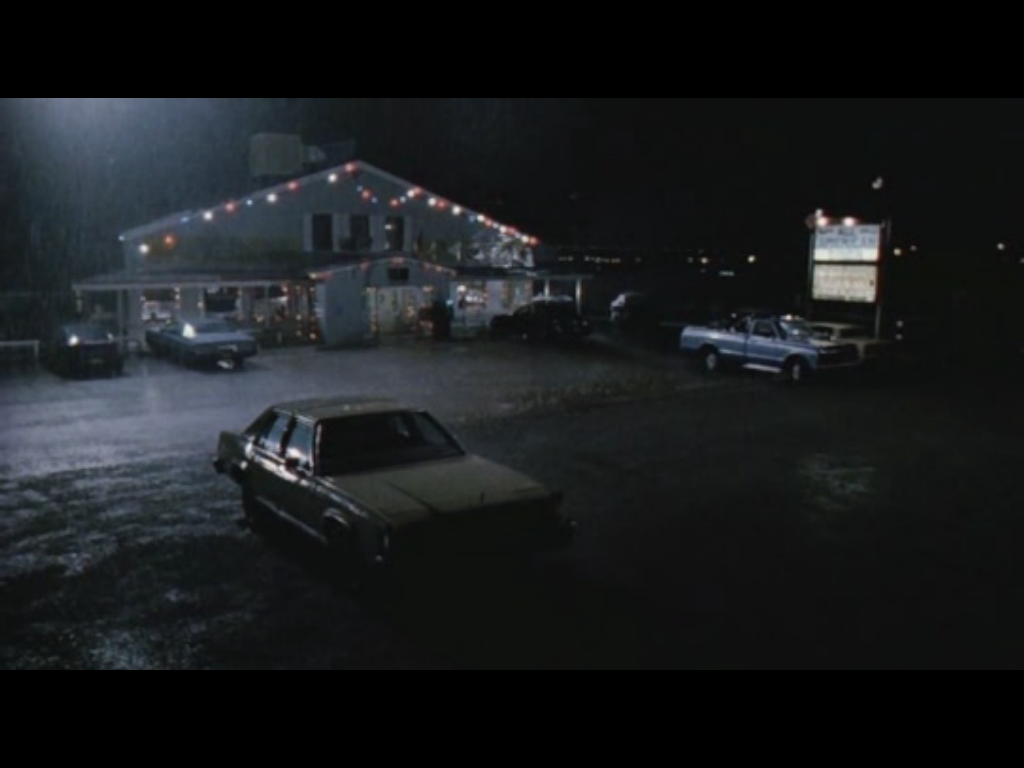
·        This extreme long shot sets the location for the first scene in the film. From the shot the audience can determine that the film is set in America, this is seen as the building is a stereotypical highway diner. The shot slowly zooms in building suspense as to what may be happening inside.  


Mise en Scene


  • The first shot of all the objects in the drainage ditch have been placed there to seem as if they’d been there for a long period of time, the baseball and the toy doll are both covered in mud and the doll is partially buried. This is part of the mise en scene as all those objects where placed there in a fashion that made them seem old and worn to the audience and immerse them into the film.


Fight Club


Sound

·        The non-diegetic soundtrack of the film is the first thing heard, the sound has a very fast tempo and it instantly sets the pace of the film for the audience.


·        The film features a narrative throughout, which is the voice of the main character (Ed Norton). The voiceover is non-diegetic but is narrating the events in the film while they happen. This an effective way to tell the story to the audience as they directly listen as it feels like they are being spoken to.


Editing


  •          The opening titles are very cleverly done, they are done by CGI and the image is of nerve messages being sent through the brain while the titles flash on screen. As the titles role through the image begins to move to various parts of the brain until it zooms out from the head from the character down the aiming sight of a gun. This is a clever way of making the titles more interesting and also making the film jump straight into the action.


  • There is a lot of use of CGI in the opening, it is combined with real camera shots as the shot on screen goes out the window down through the street to a underground car-park and then through a wall. This attracts the audience’s attention and makes them pay attention to what is happening, this is effective as it is a vital part of the story line.


Camerawork


  • The first shot is a medium close up with a high angle. The high angle adds to the effect of the gun barrel and allows the audience to clearly see the emotion of the characters face; it also shows his lack of power.


    • This 2 shot medium long shot shows us that there is another main character, but the shot allows his identity not to be revealed. This adds suspense and creates a dramatic build up to the introduction of the character. It also allows the audience to see which character has the power.


    Mise en Scene


    • The cuts and swollen eye Ed Norton has on his face are part of makeup and were put on his face by a makeup artist. The cuts are very realistic and help the audience to understand the vulnerability and the physical state the character is in. 


    V for Vendetta

    Sound

    • During the combat scene in the opening there is a repeated sound of swords clashing together. This sound would have been created externally and then added into the film afterwards. The sound was most likely made by the recording of two pieces of metal being hit together add different speeds and angles. These sounds help to make what is happening on screen more realistic for the audience. 

    • There is a non-diegetic narration over the opening of the film. The narration is made louder then what is happening on screen to make sure the audience hear its relevance, the narration tells a brief account of what is happening on screen but then moves on to telling the story of the film.


    Editing


    • The introduction of the film name is done in CGI, fire appears on the screen moving in different shapes, it then zooms out to see a V in a circle made out of fire. This fire is not real and was created by a computer programme, a lot of fire in films is often fake as it can be dangerous and unpredictable.


    Camerawork


    • This close up introduces the character to the audience, the character is very recognisable is context to the film but dim lighting is used to create a shady air about the character but also to create lighting that is realistic to the time period.


    • This low angled long shot shows the characters vulnerable situation, you can clearly see that the character is to be put to death. The low angle and the inclusion of the top of the peoples heads in the shot makes the audience feel part of the crowd and also focus’s the character in the centre of the shot.


    Mise en Scene


    • The costume of all the characters would have all had to been made by hand. Seeing as the opening is set in 1605 the chances of having clothes from that century would be very slim and also very expensive. So designers re-create costumes that closely resemble the costumes of the time period the film is set. This makes the scene more realistic and believable for the audience.


    Sin City


    Sound


    • There are diegetic sounds of the city heard, mainly police sirens and honking cars this combined with the initial shot of the city successfully creates the setting for the film.


    • There is a non-diegetic male narrative track at the beginning of the film; you see the male character moving towards the female character as the narrative goes on. The narrative finishes and the male begins to talk, but it is the same voice as the narrative so the sound moves from non-diegetic almost instantly. This is a good way of getting the film straight to the action.

    Editing


    • The film is in black and white but some colours in the film are seen. The colours seen are themes throughout the film and this is why they aren’t in black and white. It allows the audience to see easily see the reoccurring colours and link the events in the film accordingly.


    Camerawork


    • The opening shot is a long shot of a female character. The shot gives a good view of the setting yet despite this the setting is CGI. The shot was most likely taken in a studio in front of a green screen. Using CGI backgrounds is good way of creating a setting for a film is the setting is fictional, as it would be hard to make a real city look like Sin City CGI is a much easier method.


    • This close up shot helps to show the relationship between the two characters. The distance they are apart shows they are not intimate or even friends, they are total strangers to each other.


    Mise en Scene

    • The costume of the two characters shows that the film is modern and although you can’t pinpoint the exact time period from the clothes the two characters are wearing it is set in the last 10 years or so. The woman is dressed quite provocatively with a red low cut dress; this is purposeful to draw attention to her.